2026 Top Saw Blade Types for Global Buyers
Choosing the right Saw Blades is rarely a simple catalog decision. Global buyers compare material, machine type, cutting speed, tooth geometry, and expected service life. A blade that performs well on hardwood may fail quickly on stainless steel. Concrete demands different cutting behavior again.
This guide examines the 2026 market through practical buying conditions. It covers circular saw blades, band saw blades, reciprocating blades, diamond blades, carbide-tipped designs, and abrasive options. Each section considers tooth count, kerf width, blade diameter, segment design, coating, and heat resistance. These details matter on a noisy factory floor. They also matter in a small workshop.
Industry consultant Elena Marquez states, “The best blade is not the most expensive one; it is the one matched precisely to the cut.” That principle remains useful. Buyers should request measurable evidence, including cutting trials, wear records, tolerance data, and machine compatibility details. Supplier claims deserve careful checking. Marketing language can sound stronger than field performance.
The outline also compares blades for wood, metal, masonry, composites, and industrial panels. It considers climate, shipping conditions, replacement access, and operator skill. Global purchasing is not perfectly predictable. A specification sheet cannot reveal every vibration, burr, or overheated tooth. Real testing still matters. Sometimes, a lower-cost blade wins. Sometimes, it becomes expensive through downtime and waste. This guide offers a practical framework, while recognizing that local trials and qualified technical advice remain essential.
Saw Blade Basics: Structure, Materials, and Cutting Principles
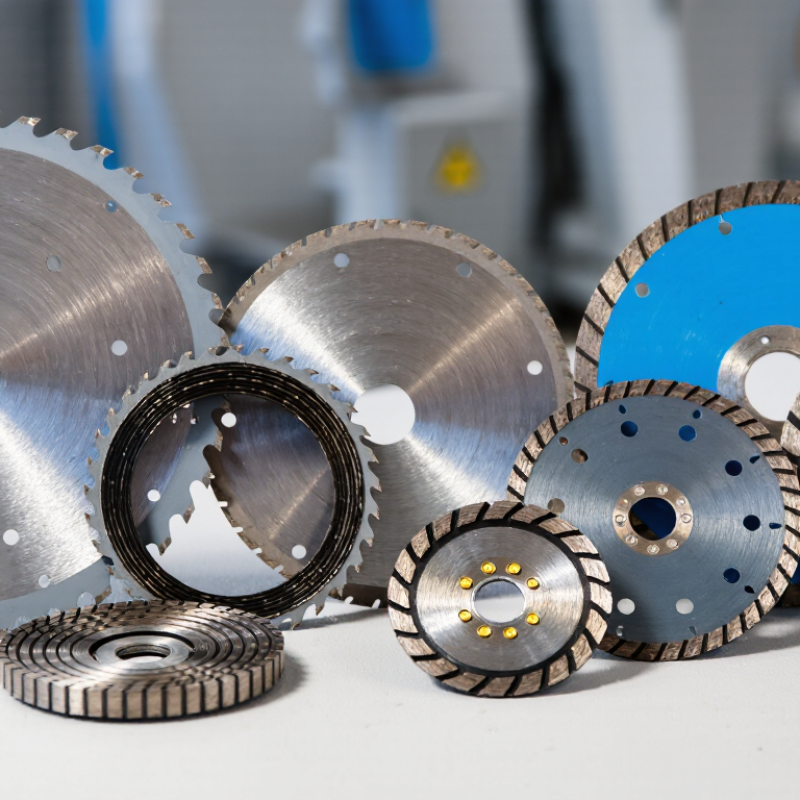
A saw blade is not just a round steel disc. Its body, teeth, gullets, and bore work as one cutting system. The bore must fit the arbor accurately. The body also needs stiffness to resist vibration. Tooth geometry controls how material enters the cut. Rake angle affects bite, while clearance reduces rubbing. Gullets carry chips away. Small changes matter. In practical testing, clean gullets often keep a blade cooler than clogged gullets. “Sharp” is an incomplete description.
Blade materials shape durability and cutting behavior. Hardened steel bodies provide flexibility and strength. High-speed steel teeth suit some general cutting tasks and tolerate repeated sharpening. Carbide-tipped teeth usually retain hardness longer when cutting wood-based panels or non-ferrous materials. Diamond-grit edges can handle highly abrasive materials, but they require careful application. Each choice has limits. I still check the workpiece before trusting a material label.
Cutting happens when tooth speed, feed pressure, and tooth shape stay balanced. Too much pressure can create heat, rough edges, or tooth damage. Too little pressure may polish the surface instead of cutting efficiently. Buyers should compare diameter, kerf width, tooth count, rake angle, bore size, and permitted rotational speed. A high tooth count can improve finish, but it may remove chips less freely. For international purchasing, dimensional drawings and test data deserve more attention than attractive packaging. One detail is easy to miss: the correct blade can perform poorly on an unstable machine.
How to Match Tooth Design and Blade Size to Each Application
For global buyers, tooth design should follow the material, not the catalog photograph. A crosscut blade with 60–80 teeth leaves cleaner edges in veneered panels. A 24–40 tooth rip blade removes wood faster along the grain. Carbide-tipped teeth suit hardwood, plywood, and repeated production work. The U.S. Forest Service Wood Handbook uses 12% moisture content as a common reference point, yet actual timber can vary widely. Wet wood may need fewer teeth and more generous gullets.
Blade diameter must match the machine’s guard, arbor, and rated speed. A 305 mm blade cannot safely replace a 255 mm blade without checking clearance and RPM. For thin sheet material, a smaller kerf reduces waste, but it can heat quickly during long cuts. Data from Grand View Research estimated the global saw blades market at roughly USD 9 billion in 2023, reflecting demand across construction, furniture, and metalworking. That scale does not make selection simpler.
Metal cutting needs a different logic. Bi-metal blades with variable tooth pitch can reduce vibration in mild steel and tubing. Harder alloys often require carbide teeth, slower feed rates, and stable clamping. Four to six teeth should generally engage the workpiece during bandsaw cutting, though section shape changes the result. A neat chart cannot replace a test cut. I have seen a technically correct tooth count fail because the feed pressure was too aggressive. Application notes from the International Cutting Tools Association also stress matching tooth pitch, material thickness, and machine power. Recheck those three details before ordering.
2026 Top Saw Blade Types for Global Buyers
How to match tooth design and blade size to each application
The chart shows representative purchasing specifications for common circular saw applications. Larger diameters generally support deeper cuts, while tooth count and tooth geometry should be selected according to the material and required finish. ATB is commonly used for wood, TCG for abrasive or non-ferrous materials, and fine-pitch carbide or HSS/TCT designs for metal cutting. Values are typical midpoints of widely used professional blade specifications and are not brand-specific.
Performance Factors: Speed, Precision, Durability, and Heat Control
2026 Top Saw Blade Types for Global Buyers
Performance Factors: Speed, Precision, Durability, and Heat Control
Selecting a saw blade begins with the material, not the advertised tooth count. Fine-tooth blades usually produce cleaner edges on plywood, laminates, and thin panels. Coarser teeth remove material faster from solid wood, but they may leave more tear-out. For metal, tooth geometry and cutting speed must match the alloy. Too much speed can create blue heat marks, warped edges, or premature tooth wear. In workshop testing, a steady feed rate often improves precision more than simply choosing a faster blade.
Durability depends on tooth material, body tension, and operating discipline. A rigid blade can hold a straighter cut, yet excessive pressure still causes deflection. Heat control deserves equal attention. Clear gullets, suitable tooth spacing, and occasional pauses help release heat during demanding cuts. I have seen operators blame the blade when the real issue was a dull guide, uneven stock, or a poorly supported workpiece. That mistake is common. Performance claims should be checked against thickness, machine power, and expected production volume.
Tips: Match tooth pitch to material thickness. Keep the blade clean and properly tensioned. Use a slower feed when resistance rises. Inspect teeth after unusual vibration. Do not judge durability from one short cutting session. Record cut quality, temperature, and service life across several jobs. Some recommendations will still need adjustment, because workshop conditions rarely remain identical.