What is Cutting Wire and its Applications in Various Industries?
Cutting Wire is a specialized tool widely used across various industries. It consists of a thin wire, often made from durable materials. This wire serves a critical role in various applications, such as cutting, shaping, and finishing materials. Engineers and manufacturers value Cutting Wire for its precision and effectiveness.
In many sectors, Cutting Wire provides a solution to complex cutting needs. For instance, the electronics industry uses it for slicing semiconductor wafers. In construction, it aids in cutting concrete and metal components. Its versatility makes it essential in manufacturing and creative industries alike.
However, not all Cutting Wire is created equal. Different materials and thicknesses affect the performance of the wire. Users must consider these factors to achieve the best results. With advancements in technology, the quality and reliability of Cutting Wire continue to improve. Understanding these nuances is important for optimal usage.

Understanding Cutting Wire: Definition and Basics
Cutting wire is a specialized tool used to slice through various materials with precision. It is often thin, flexible, and made from durable metals. In industries such as manufacturing and electronics, cutting wire plays a crucial role in production processes. For instance, it is essential in the production of semiconductor devices. A report by MarketsandMarkets notes that the semiconductor market is expected to grow from $414.5 billion in 2022 to $600 billion by 2027, driving the demand for cutting wire.
Applications of cutting wire extend to the automotive and aerospace sectors. Engineers utilize cutting wire for intricate tasks, such as cutting composite materials. These materials are lightweight yet strong, making them ideal for aircraft and high-performance vehicles. Studies indicate that up to 25% of the weight of modern vehicles comes from advanced materials. However, the precision needed in these applications may sometimes lead to errors in cutting, which can result in material wastage and higher costs.
In the medical field, cutting wire is used in the manufacturing of surgical instruments and implants. According to a report by Grand View Research, the global surgical instruments market size is projected to reach $71.3 billion by 2030. Despite advanced technology, the industry faces challenges in maintaining consistent quality when using cutting wire. Issues like improper tension or misalignment can affect the cutting process, leading to subpar outcomes.
The Composition and Types of Cutting Wire Materials
Cutting wire is essential in various industries, including manufacturing, construction, and electronics. The materials used to create cutting wire vary significantly based on application requirements. Common types include copper, stainless steel, and tungsten wires, each chosen for its specific properties. Copper wire is favored for its conductivity, while stainless steel offers strength and corrosion resistance.
In the electronics sector, cutting wire is pivotal for precise applications. A report by the International Journal of Advanced Manufacturing Technology indicates that demand for high-precision cutting tools could rise by 15% yearly. This growth underscores the importance of choosing the right material for each task.
Tip: When selecting a cutting wire, consider the material's properties and the application needs. Not all wires perform similarly under stress or heat. Also, look out for advancements in wire technology; innovative materials are continually being developed.
However, challenges exist in material durability and flexibility. Some wires may not withstand repetitive use or varied environmental conditions. Regular industry reviews highlight the need for continuous improvement in wire quality and performance standards. Awareness of these factors can lead to better decision-making in material selection.
Applications of Cutting Wire in Various Industries
This chart depicts the various applications and their respective percentages in which cutting wire is utilized across different industries. The data reflects the composition of cutting wire materials used in each application.
Key Applications of Cutting Wire in the Electronics Industry
Cutting wire plays a crucial role in the electronics industry. It is often used to slice thin wafers and delicate components. Precision is key in this field, as any error can lead to significant losses. Cutting wire must be strong yet flexible, allowing it to navigate intricate designs without causing damage.
In semiconductor manufacturing, cutting wire helps create microchips. These chips require extreme accuracy in cutting to maintain functionality. Engineers often rely on various types of cutting wire, tailored for specific tasks. The versatility of these wires means they can adapt to different material types, whether silicon or gallium arsenide.
Tip: Regularly check for wear and tear on cutting wire. A worn wire can compromise precision and increase waste.
Moreover, cutting wire is critical in assembling printed circuit boards (PCBs). The process involves cutting fine traces on boards, essential for proper electrical connectivity. The application of cutting wire ensures that all components fit accurately, enhancing performance.
Tip: Use the right tension when operating cutting wire. Too much tension can lead to breakage and improper cuts.
While cutting wire is vital, it’s essential to critique its limitations. Over-reliance on automatic cutting can lead to oversight in quality control. Balancing automation with manual checks can ensure better outcomes in production.
Use of Cutting Wire in the Aerospace and Automotive Sectors
Cutting wire is essential in aerospace and automotive industries. This specialized wire cuts through various materials precisely. It’s versatile, used for slicing, shaping, and trimming components efficiently.
In aerospace, cutting wire shapes lightweight components. It helps create intricate parts from complex materials like composites and metals. The demand for precision is high. Even a slight error can impact performance. Each cut must be accurate. Manufacturers need to assess their techniques continually to ensure top-notch standards.
In the automotive sector, cutting wire streamlines production. It’s vital for making parts such as gears and frames. These components require durability and reliability, so cutting methods must be refined. Even a minor oversight can lead to significant issues.
Tips for using cutting wire effectively include regularly checking the wire's tension. Consistent tension leads to better cuts. Also, consider the environment. Dust and debris can affect performance. Keep your workspace clean for optimal results.
What is Cutting Wire and its Applications in Various Industries?
| Industry |
Application |
Materials Used |
Benefits |
| Aerospace |
Cutting of composite materials for aircraft components |
Carbon fiber, fiberglass |
Precision cutting, reduced waste |
| Automotive |
Manufacturing of lightweight components |
Aluminum, plastic composites |
Enhanced fuel efficiency, cost-effective |
| Electronics |
Separation of semiconductor wafers |
Silicon, gallium arsenide |
High precision, minimal damage to wafers |
| Medical |
Slicing of medical imaging equipment components |
Titanium, plastics |
Sterility, precision |
| Construction |
Cutting of structural materials |
Steel, concrete composites |
Efficiency in material handling, speed |
Future Trends and Innovations in Cutting Wire Technology
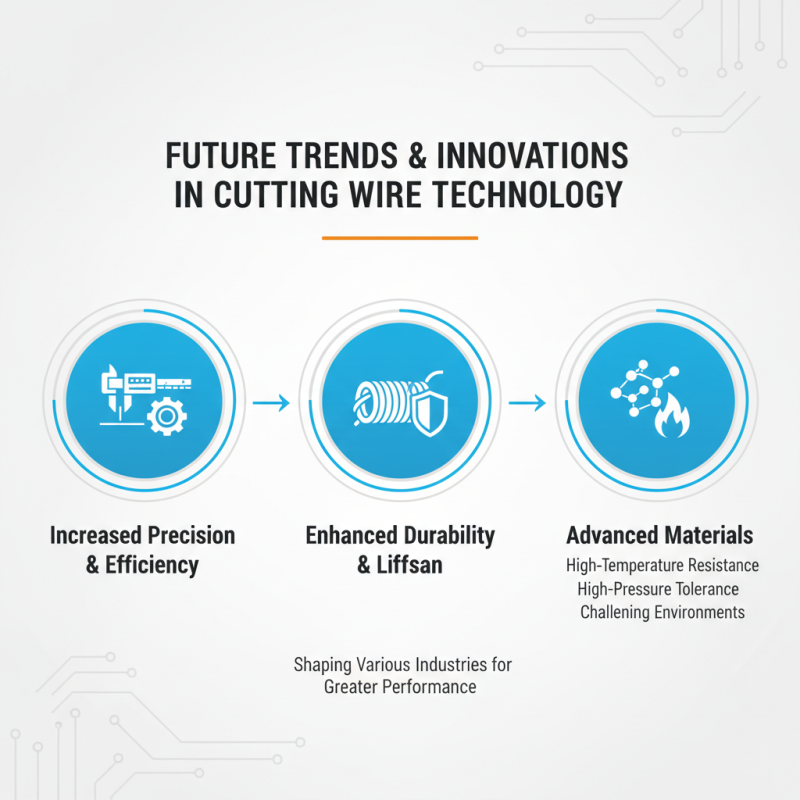
Cutting wire technology is experiencing significant innovations, shaping various industries. As manufacturers seek efficiency, the focus is on enhancing precision and durability. Future trends include advanced materials that extend cutting wire lifespan. These materials can withstand higher temperatures and pressure, making them ideal for challenging environments.
Moreover, automation stands at the forefront of cutting wire applications. Using robotic systems can improve the speed and accuracy of cutting processes. This trend is visible in industries like automotive and aerospace, where precision is paramount. Adopting smart technologies, such as IoT, allows real-time monitoring of wire performance, enabling immediate adjustments to reduce waste.
However, the development of cutting wire technology isn’t flawless. Challenges include ensuring consistent quality during mass production. Variations in wire properties can lead to unpredictable results, affecting productivity. Continued exploration and adaptation are crucial for overcoming these issues, ultimately leading to smarter, more reliable cutting solutions.