Pawsome-Specializing in vet health products since 2015

Inquiry
Form loading...
Pawsome-Specializing in vet health products since 2015
Choosing Saw Blades is not just a matter of matching diameter. Tooth count, tooth shape, kerf width, and blade material all affect the cut. A fine-tooth blade can leave a cleaner edge in plywood, while a coarser blade may cut framing lumber faster. The wrong choice can cause rough edges, burning, vibration, or unnecessary strain on the saw. Small details matter.
Woodworking educator Marc Spagnuolo is known for practical tool demonstrations. A useful summary of his task-focused approach—not a verbatim quotation—is: “Match the tool to the cut you need.” That principle guides this overview, but blade choice still depends on your saw, material, and finish requirements. Check the saw manual and blade specifications before buying. Never assume that a blade fitting the arbor is suitable for every saw or task.
This guide’s 10 tips cover the decisions that make a visible difference: compatibility, diameter, tooth count, tooth geometry, kerf, material, and intended cut. It also considers maintenance, safety, and value over time. A sharp, suitable blade can help produce straighter cuts and reduce waste. Yet even a premium blade cannot fix a loose fence or rushed setup. That is worth remembering. The goal is not to find one “best” blade for everything. It is to choose a dependable blade for the work in front of you.
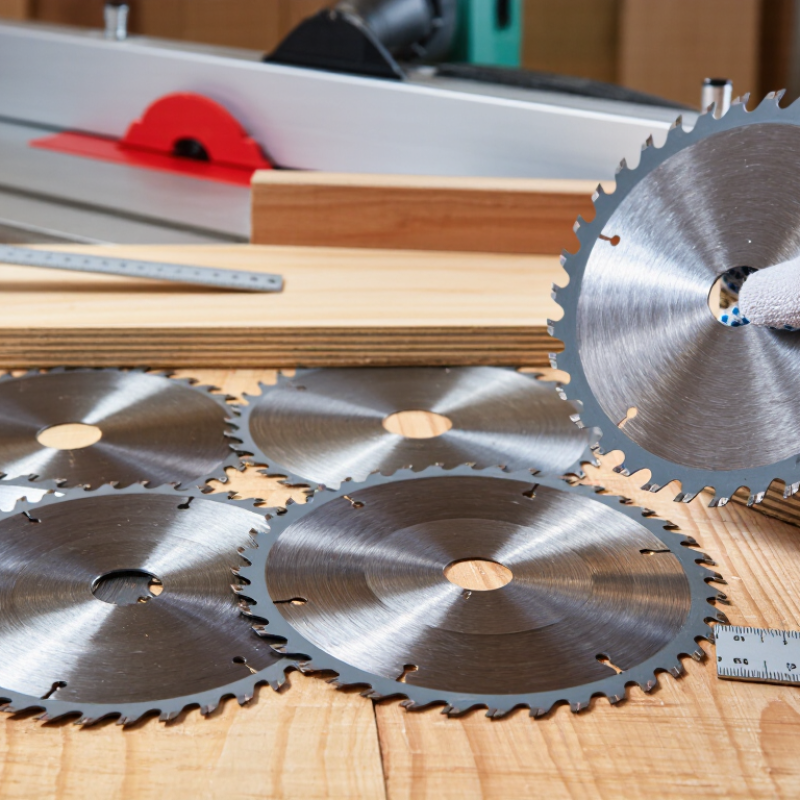
Choosing a blade starts with the material and the cut, not just the saw’s diameter. For solid wood, a rip blade has fewer teeth and larger gullets to clear chips while cutting along the grain. The cut is fast, but its edge may look rough. A crosscut blade has more teeth, helping it slice across grain with less splintering. On a plywood panel, that finer tooth pattern can leave a cleaner edge, though feeding too quickly may still cause tear-out.
Combination blades balance ripping and crosscutting when changing blades between tasks is inconvenient. They are practical, but rarely ideal for every cut. Carbide-tipped teeth usually stay sharp longer than plain steel teeth, while a thin-kerf blade removes less material and can reduce strain on a compatible saw. Compatibility matters. Check the saw manual for blade diameter, arbor size, and speed limits. Then inspect the teeth for damage and match the blade’s stated use to the cut. A chart can guide you, but wood species, feed rate, and support also affect the result. I would not expect one blade to produce perfect edges on every material.
| Tip | Blade Type or Feature | Best Suited For | What to Check |
|---|---|---|---|
| 1. Match the blade to the saw. | Circular, table, miter, jigsaw, reciprocating, and band-saw blades are not interchangeable. | Using the blade with the tool it was designed for. | Check the saw manual for compatible blade type, diameter or length, arbor or shank, and maximum speed. |
| 2. Choose a blade for the material. | Wood-cutting, metal-cutting, masonry, and multipurpose blades have different tooth designs and materials. | Cutting the material specified by the blade manufacturer. | Use a blade rated for the workpiece. A blade intended for wood should not be used to cut metal or masonry. |
| 3. Consider tooth count and cut quality. | Tooth count affects cutting speed and finish; the result also depends on blade design and material. | Rough cuts, general-purpose work, or finer-finish cuts. | For circular blades, lower tooth counts are commonly used for faster rough cuts, while higher counts often provide a finer finish. Follow the blade guidance for the specific material. |
| 4. Select the appropriate tooth geometry. | Common circular-blade tooth designs include flat-top, alternate-top-bevel, and combination patterns. | Ripping, crosscutting, or general-purpose cutting in wood. | Flat-top designs are commonly used for ripping; alternate-top-bevel designs are often used for crosscuts. Combination blades are intended for mixed tasks. |
| 5. Check the blade diameter and cutting capacity. | Blade diameter and the saw’s design determine compatible size and available cutting depth. | Making cuts within the saw’s rated capacity. | Use only the diameter specified for the tool. Never fit an oversized blade or remove a guard to gain cutting depth. |
| 6. Match the blade to the cut direction. | Ripping blades are designed for cuts along the wood grain; crosscut blades are designed to cut across it. | Solid wood, where grain direction influences cutting. | Choose a blade suited to the cut. For plywood and other sheet goods, use a blade recommended for sheet materials to help limit splintering. |
| 7. Pick the right jigsaw blade for the job. | Jigsaw blades vary by shank style, length, tooth spacing, and material. | Curves, straight cuts, and detail work in wood, metal, or plastics. | Confirm shank compatibility and choose a blade rated for the material and its thickness. Finer teeth are commonly used for thinner metal. |
| 8. Use a suitable reciprocating-saw blade. | Reciprocating blades differ in length, tooth pattern, and construction. | Demolition, pruning, and cutting materials such as wood or metal when the blade is rated for them. | Choose a blade long enough for the workpiece, with a material rating and tooth pattern appropriate to the cut. |
| 9. Consider kerf and blade stability. | Kerf is the width of material removed by the cut; blade thickness and construction affect stability and waste. | Work where cut width, power demand, or accuracy matters. | Confirm the blade is compatible with the saw’s riving knife or guard requirements. A thinner kerf does not automatically mean a better cut. |
| 10. Inspect and maintain the blade. | Sharp, clean, undamaged blades cut more effectively than worn or damaged ones. | Safe, consistent cutting across suitable materials. | Disconnect power before inspection. Replace blades with cracks, missing teeth, or other damage, and follow the manufacturer’s instructions for cleaning and sharpening. |