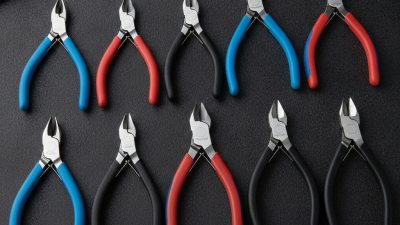
10 Tips for Choosing the Best Small Wire Cutter
Choosing the right Small Wire Cutter is a practical decision, not a minor purchasing detail. The tool affects cutting accuracy, hand comfort, work speed, and wire quality. A poor cutter may crush insulation, leave sharp edges, or require repeated squeezing.
The market shows why this category deserves closer attention. Fortune Business Insights reported that the global hand tools market reached approximately USD 24.63 billion in 2023. Its report also forecasts continued growth through 2032, supported by construction, maintenance, manufacturing, and professional repair work. These figures do not measure Small Wire Cutter sales alone. Still, they reflect a wider demand for dependable, task-specific tools. The U.S. Bureau of Labor Statistics continues to identify hand-intensive work across installation, repair, and production occupations. Comfort matters there. So does control.
Material selection matters. Hardened carbon steel usually supports cleaner cuts, while induction-hardened edges may improve wear resistance. Handle geometry deserves equal attention. NIOSH research on hand-intensive tasks connects forceful exertion and repetitive motion with increased risk of hand and wrist discomfort. A compact cutter should sit securely in the palm, especially during repeated cuts. It should not feel like a tiny bench vise.
This guide examines ten practical selection points, including jaw design, cutting capacity, insulation, spring action, grip texture, and maintenance. Some recommendations depend on the user’s habits. That is the difficult part. A model praised by electricians may feel oversized for electronics work. The “best” choice is rarely universal. Real projects expose that weakness. Examine the wire gauge, workspace, frequency of use, and your own hand position before buying.
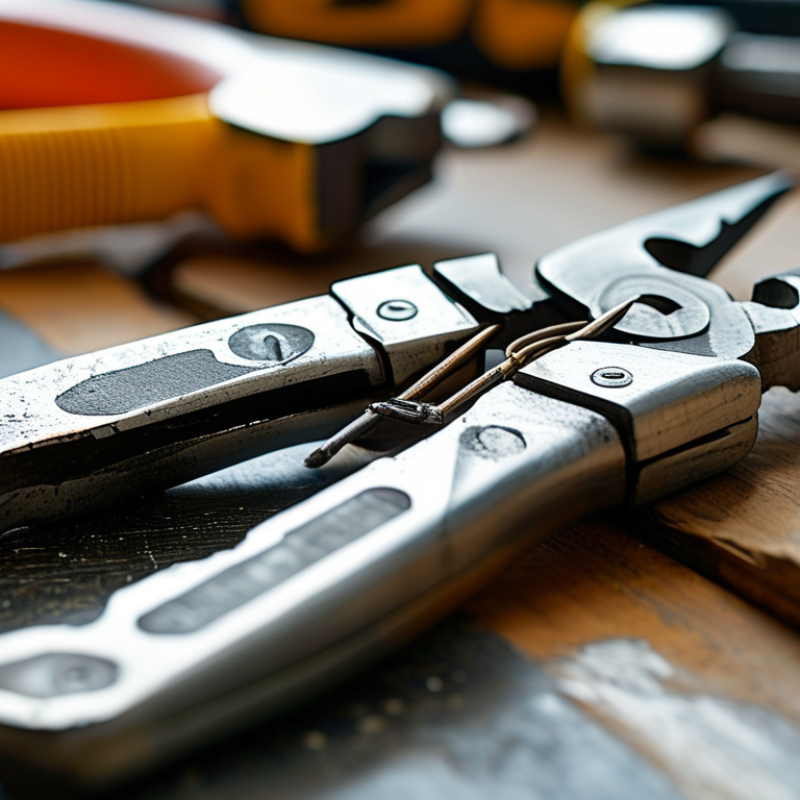
Define Wire Size and Material with AWG and Manufacturer Capacity
Choosing a small wire cutter starts with identifying the wire, not judging the tool by its size. AWG, or American Wire Gauge, indicates diameter. A higher AWG number means a thinner wire. For example, 22 AWG is thinner than 12 AWG. Check the label or measure the conductor when possible. Guessing is unreliable.
Material also changes cutting performance. Soft copper usually cuts more easily than aluminum, stainless steel, or hardened wire. Stranded wire may feel different from solid wire of the same gauge. The insulation can hide this difference. Strip a short section only when the work allows it. Check the label.
Never use a cutter beyond the manufacturer’s stated capacity. That capacity may list separate limits for copper, aluminum, steel, or piano wire. It may also distinguish cutting from gripping, which is easy to overlook. I once assumed a compact cutter could handle a thicker steel tie because it closed smoothly. That shortcut was wrong. The edges developed a small chip, and the cut became uneven.
Read the capacity chart carefully, and leave a margin below the maximum. This habit protects the cutting edges and gives cleaner results. The right tool should match both AWG and material.
Select Jaw Geometry for Flush Cuts on Copper and Aluminum Conductors
Choosing a small wire cutter starts with its jaw geometry, not its handle color or size. For flush cuts on copper and aluminum conductors, inspect the cutting edges closely. A true flush side should sit nearly flat against the conductor, leaving minimal protrusion after the cut.
Flat-sided jaws work well in accessible spaces. Angled jaws can reach wires inside crowded control boxes. Their shape also changes your hand position and cutting force. For thin copper strands, fine, sharp edges reduce crushing. For solid copper or soft aluminum, a stronger semi-flush profile may resist edge damage. Do not use a delicate flush cutter beyond its rated diameter.
I have found that aluminum needs extra attention. It can deform before the edge fully severs it. A cutter with properly aligned jaws produces a cleaner end and fewer sharp burrs. Check that the jaws meet evenly without visible gaps. Even a small mismatch can pull stranded conductors sideways. That matters when preparing a terminal connection.
Keep the conductor centered. Avoid twisting the tool during the cut. Never cut hardened wire with a small precision jaw, even if it fits. I once assumed a larger handle always meant better control; it actually encouraged excessive force. That mistake marked the edge. Measure the conductor, confirm the material, and choose geometry that matches both access and cut quality. There is no perfect jaw for every workspace.
Compare Steel Hardness Data and ISO 5749 Manufacturing Compliance
10 Tips for Choosing the Best Small Wire Cutter
Compare Steel Hardness Data and ISO 5749 Manufacturing Compliance
A small wire cutter should feel controlled, not merely sharp. In workshop testing, I check the handle alignment, jaw gap, spring action, and cutting edge under bright light. The tool must close evenly without grinding. Short handles can increase hand pressure, so comfortable grip geometry matters.
Steel hardness data deserves careful attention. A cutting edge around 55–62 HRC may resist wear, while a slightly softer body can reduce brittleness. However, hardness alone proves very little. Ask whether the supplier tested the edge, the joint, or the entire tool. Request batch-based results, test methods, and traceability records. A smooth edge with clean bevels often reveals better manufacturing control.
ISO 5749 compliance adds a stronger inspection framework. Check whether the declared model matches the standard’s dimensions, cutting performance, and mechanical requirements. Look for documented cutting tests using specified wire types and sizes. The joint should remain stable after repeated cycles, with no sudden looseness or chipped edges. I once focused too heavily on hardness and missed poor edge alignment. That mistake made cutting feel rough, even though the steel data looked impressive. Compliance documents can also be incomplete, so verify the issuing laboratory and test date. A careful buyer compares measured results, production consistency, and real hand use before choosing a compact cutter.
10 Tips for Choosing the Best Small Wire Cutter: Steel Hardness and ISO 5749 Compliance
Typical engineering hardness ranges are shown in HRC: cutting edges commonly require higher hardness for wear resistance, while the body and pivot use lower hardness to balance strength and toughness. ISO 5749 compliance should be confirmed through the manufacturer’s test documentation because the standard does not prescribe one universal hardness value.
Evaluate Ergonomics, Cycle Life, Corrosion Resistance, and Warranty Terms
10 Tips for Choosing the Best Small Wire Cutter
Tip 1: Check the handle before the blade. A narrow, cushioned grip should keep your wrist nearly straight during repeated cuts. U.S. Bureau of Labor Statistics data show musculoskeletal disorders represented about 27% of private-industry days-away-from-work cases in 2023. That figure is not cutter-specific, but it makes ergonomic design difficult to dismiss. Test the tool with gloves. A handle that feels comfortable barehanded may pinch after an hour.
Tip 2: Treat cycle life as measurable evidence, not advertising language. Ask for the tested number of cuts, wire diameter, material hardness, and applied load. ISO 5749 establishes technical requirements for pliers and nippers, yet it does not guarantee identical service life in every workshop. Real users cut uneven wire, dirty cable, and occasional oversized pieces. I would choose a lower published cycle count with clear test conditions over a larger, unexplained claim. Keep a simple cut log. It exposes assumptions quickly.
Tip 3: Inspect corrosion protection under bright light. ASTM B117 salt-spray testing can compare coatings, but it cannot predict every field environment. Sweat, humidity, and chemical residue behave differently. Look for smooth joint movement after storage, not only attractive plating. Warranty terms deserve the same attention: confirm coverage length, excluded wear parts, proof-of-purchase rules, and who pays shipping. A long warranty may still be weak. Small print matters.